
Heritage in Dunhuang
Crescent Moon Spring
月牙泉
About Crescent Moon Spring
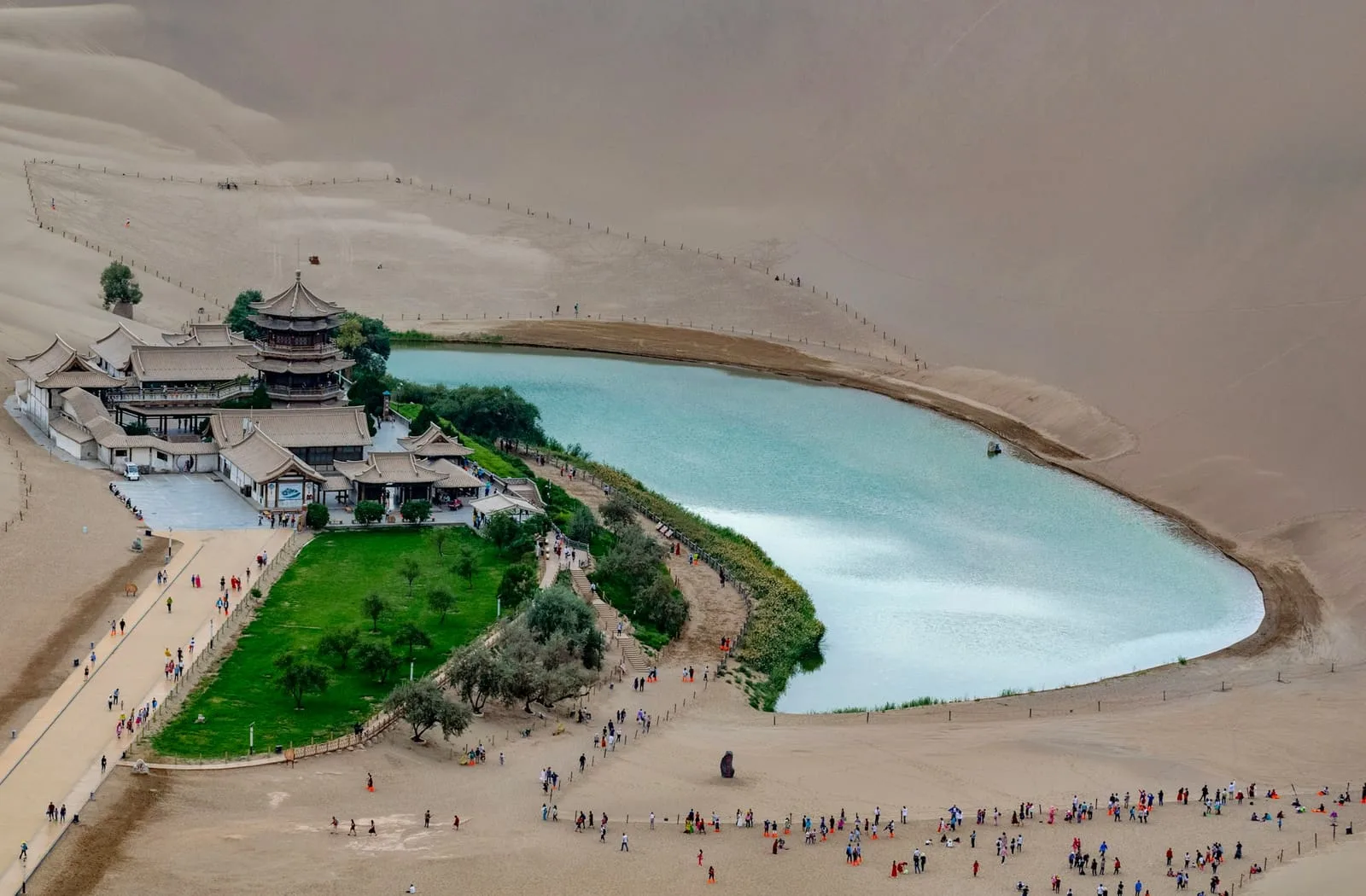
Crescent Moon Spring lies in the bowl of sand at the foot of Mingsha Mountain, a sliver of water about 240 m from tip to tip and some 50 m across at its widest, measured at 218 m by 54 m in another account. The Han called it Shajing and later readings called it Yaoquan, the medicine spring; the present name dates from the Qing. It has been fed for centuries by the underground flow of the Dang River rather than by any surface stream, and the ring of dunes has never buried it, because the wind sweeping the slope curls upward and carries sand over the crest instead of into the water. Local inventories list three treasures: iron back fish, seven star grass and the five coloured sand.
Tickets and fees
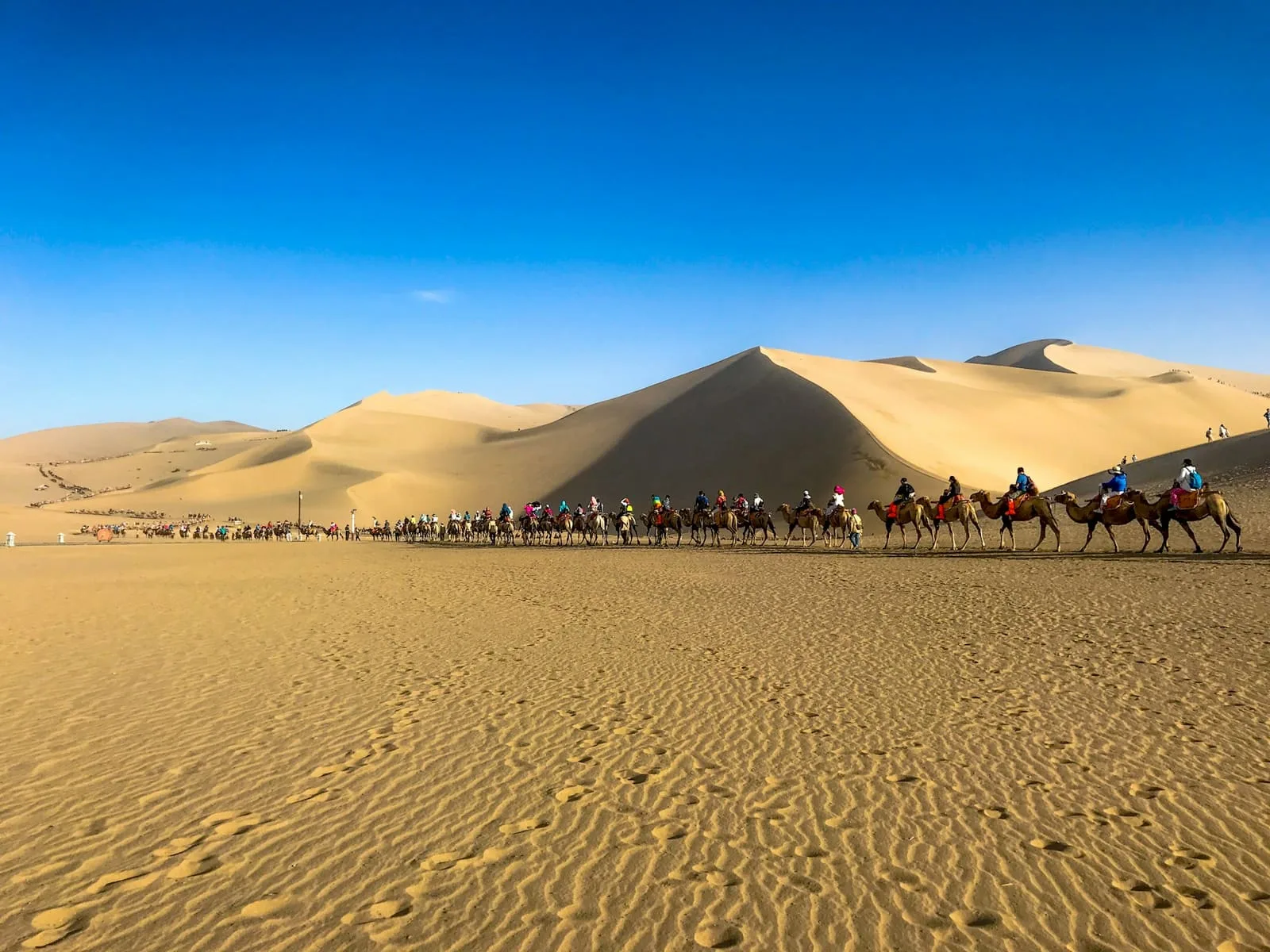
The spring is not sold on its own. It comes with the Mingsha Mountain ticket, 110 yuan in peak season and 55 at other times, re-usable within three days on an identity card or a face scan. Extras are paid on the spot: roughly 100 yuan for a camel ride of 40 minutes, 20 for a sand slide, 10 to 20 for the one way shuttle, and 10 to hire shoe covers. Students and visitors past 60 get in for half with a document. The boardwalk and the bank terrace carry no separate charge. Prices checked 14 October 2026.
What to expect
- Crescent of water held inside the dunes
- Iron back fish, seven star grass, five coloured sand
- Fed by twelve percolation ponds 4 km away
Best for
- Photographers
- Couples at dusk
- Hydrology and nature fans
How to plan your visit
Water levels are monitored and published, and the recovery is the story. In July 2026 the average depth was 3.2 m and the deepest point between 4.9 m and 5 m depending on the bulletin, with the surface at 31.73 mu against 32 mu elsewhere, a ten year rise of 2.5 m, and the quality held at grade II. In 1999 the average was under 1 m and the area 2.56 mu. The recharge is not a hose: twelve percolation ponds in the Dang River bed 4 to 5 km away, covering 98 hectares, seep more than 12 million cubic metres a year along the natural groundwater path. Drilling, land clearance and resettlement are banned and 82 wells were closed. Stay on the boardwalk.
More to see in Dunhuang
This attraction is covered in the Dunhuang travel guide.
Before you go, check China travel essentials for payments, SIM cards, transport, and visas.
Plan the rest of your Dunhuang trip
Compare tours, tickets and day trips with live availability before you lock in your route.
Check things to do on Trip.com
Prices and availability change frequently — always confirm the live price on Trip.com before booking. We use affiliate links and may earn a commission from qualifying bookings, at no extra cost to you.